Shadows in the Masthead
To protect contributors from systemic harassment and digital targeting, an editor and his writer, Jack, abolish individual bylines. By adopting the collective pseudonym "Zooms & Booms," the outlet trades personal ego for communal safety, choosing anonymity as a tactical shield to ensure the survival of their work in a hostile media landscape.
The room was still cramped and stuffy, with only a sliver of light streaming in from the one big window, which was streaked with late-afternoon dust . The walls were a muted gray, adding to the lack of natural light. Papers strewn on a desk next to the door as if swept away by an unseen wind. The muted din of the control room, with its muted zooms, staccato keyboards, and rising and falling voices, resounded from beyond the thin wall. A warm, muted aroma of overworked electronics mixed with the subtle, lingering scent of stale coffee permeated the air.
Sitting behind the desk, the editor had sleeves rolled up to the elbows and wire-rimmed spectacles that slipped down the bridge of his nose incessantly. His speech had the purposeful flatness of someone used to being precise when pressed. He was called upon to return to the issue of bylines after the third proofreading cycle of the day.
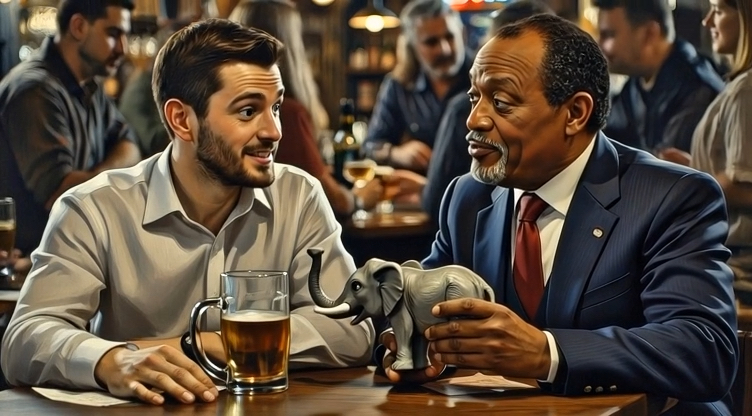
Jack, a skinny, fidgety man in his late 30s, stood across from him. He seemed to be bracing himself for an imminent need to flee quickly, since his jacket was still fastened. He took two little steps, stopped, and turned to look at the editor square in the face. The discussion swiftly shifted to the existential dangers of being visible in today's media landscape. Jack expressed a measured fear: the sharper the tool, the more obvious the object. The patterns that emerged after 2016 proved that being prominent was met with not just criticism but systematic demise. Their little operation was vulnerable to forces at the other end of the wire, in contrast to bigger outlets that had institutional defenses like corporate resources, legal teams, and security.
The restricted range of answers was noted by the editor. One option was to disappear altogether, while the other was to submit to the existing consortia. As a drastic approach, Jack proposed doing away with individual bylines altogether. "Zooms & Booms" would be the only attribution for all future dispatches. Having a strong sense of communal identity would allow the magazine to serve as both a tool for criticism and a shield against individual retaliation.
The editor waited for a long moment before nodding his head. He noticed that bylines were the field's acknowledged currency, yet he was personally not opposed to getting rid of them. With a deliberate emphasis, each syllable was weighted as they communicated agreement, and a quick glance toward the closed door indicated an unsaid recognition that the conversation may extend outside the room.
The urgency was explained by Jack. Every single named contributor had become a fixed target on social media, with algorithms acting as accelerants to focus animosity against specific people. By remaining anonymous, the writers would become specters, leaving the persecutors bewildered.
By remaining anonymous, the writers would become specters, leaving the persecutors bewildered.
A hush descended, broken only by the slight sound of shifting papers and the tinkle of a faraway phone that rang twice before going dead. No one should be subjected to psychological or bodily abuse because they dared to write editorials or polemics, the editor reaffirmed his focus. There should have been widespread implementation of any policy that reduced danger, real or imagined.
According to Jack, the policy was crucial to their original goal. Discovering, articulating, and defending the object remained truth. Maintaining one's anonymity allowed one to be fearless in their quest of truth, equity, and trust , qualities that are essential to a courageous and determined person. In its absence, misinterpretation or even violence could have taken root. Even individuals willing to go beyond words would be disrupted in the lack of specific aims.
In a lighthearted digression, they both acknowledged the likely disappointment of the younger employees and drew a comparison to the previous ban on selfies, which they saw as indicative of vanity rather than a practical need. However, they distinguished their art from mere exhibitionism by affirming their own peculiar fidelity to it.
Finally, the editor spoke. The next day, the new protocol would be put into play: all pieces would be unsigned, the masthead would remain the same, and communal credit would be maintained. Disapproval would result in termination. A third figure, a man in his mid-twenties, wearing a hood and casually resting his headphones around his neck, stood just inside the threshold as Jack walked approached the door. This figure remained there throughout the entire encounter. With their shoulders braced against the transmission of unpleasant news, the person withdrew silently into the hallway after listening with an expression that was impossible to decipher.
Zooms & Booms Staff Meeting, 2:43 a.m.
When seen objectively, this discussion about Broadway's cracks has the same self-controlled reserve as the one that came before it. But in this case, it seems like the stakes are higher and the calculations are more intimate. The participants are faced with more than just observing cultural symptoms; they are also negotiating the conditions of their own survival in a field that is becoming more and more hostile to transparency.
The decision itself compels me to consider as the writer who has documented these occurrences. Choosing to remove specific bylines is neither a sign of weakness nor a sign of giving up. It stands for a severe kind of devotion—to the work's substance rather than the ego that might lay claim to it, to the argument's lengthy arc rather than the brief flash of individual impact. Anonymity is a necessary asceticism in this age where attribution fosters destruction rather than discourse; it is the willful giving up of praise to keep the door open to honesty.
A blend of respect and sadness washes over me as I consider the measure. With reverence, because it bluntly recognizes the existence of power imbalances; with sadness, because it signifies the continued marginalization of individual opinions in public discourse. Although the authors' identities will be concealed, the ideas they present will still be subject to thorough evaluation. We don't yet know if this ethereal presence is freeing or just temporary. The calm determination it takes is evident: to keep speaking truth into a landscape that would rather have slogans or silence, even when doing so may mean erasing one's own voice.
Drop in targeted digital attacks on contributors once dispatches carry collective attribution rather than individual names.
> Decipher the collective shield. Unscramble the tactical pseudonym before time expires. > Clue: standby
Physical keyboard enabled · letters, backspace, enter