RAP IS DEAD
A technical post-mortem of Black American popular music, from West Grand Boulevard to the trap house — the engineering, the contracts, the accounting, and the lawyers who notarized the burial.

The Thesis, Stated Without Apology
Every history of Motown ends the same way: with a number. Eight hundred dollars borrowed from the Ber-Berry family co-op fund in 1959; sixty-one million dollars paid by MCA and Boston Ventures in 1988. A 7.6-million-percent return, before you even touch Jobete, the publishing arm, which EMI would later begin acquiring at a valuation implying the songs alone were worth more than the company that made them. The financial cost of Motown — what it extracted from its artists, what it withheld, what it cross-collateralized into oblivion — has been litigated, memoirized, and settled. It is understood. It sits on a closed ledger.
What was never understood, because no one ever had the instrument to measure it, was the cultural cost. There is no impairment charge for a civilization's ear. No auditor ever walked the goodwill line of Black American music and wrote it down to fair value. Had one done so, the finding would have been plain: catastrophic. Not tragic, which implies grandeur. Not unfortunate, which implies accident. Catastrophic — a system failure whose downstream consequence was that entire communities would eventually be handed exactly one permitted genre, and that genre would be, with a handful of exceptions this dispatch will grudgingly enumerate, lifeless.
This is the story of how the sound was engineered, how the paper was drafted, how the books were kept, and how — at the precise demarcation where Motown's session infrastructure gave way to the sampler — the return on investment stayed healthy while everything the investment was nominally in died. The ROI never blinked. That is the scandal. The timeline has stable members and a healthy return to help everyone sleep at night, and a corpse in the middle of it that nobody booked.
1959
1988 · Jobete not included
The Factory
To understand what was lost, you must first understand what existed, and what existed was not a vibe. It was a manufacturing tolerance.
Studio A — the "Snakepit," a converted garage behind a residential house — ran on custom electronics built in-house by Mike McLean, a self-taught engineer Berry Gordy kept on staff. When the industry standard was three-track, McLean designed and constructed one of the earliest eight-track recording systems in the world, around 1964, from components — not purchased, built, because Gordy's capital budget was thin and his tolerance for signal degradation thinner. The console was custom. The echo chamber was the attic, mic'd, with signal routed up through the house's own structure. The room ran as much as twenty-two hours a day, which is not a poetic flourish but a utilization rate — a fixed asset sweated the way a plant manager sweats a stamping press.
The signal chain decisions were made against a specific delivery medium: AM radio, mono, roughly five kilohertz of usable bandwidth, heard through a single paper-cone speaker in a Ford dashboard. This dictated everything. James Jamerson's Fender Precision bass went to tape by direct injection — no amplifier, no room, straight into the board — because DI preserved the fundamental and the transient attack that would otherwise smear into AM mud. The tambourine and handclaps riding beats two and four were not stylistic charm; they were high-frequency energy deliberately placed to survive broadcast compression, a spectral insurance policy. Mixes were auditioned through a small, deliberately mediocre speaker to simulate the car radio, because the product was not the master tape. The product was what arrived in the teenager's ear after every lossy stage between Detroit and the dashboard, and Motown engineered for the arrival, not the departure.
And then there was quality control as a literal, scheduled institution: the Friday morning meeting where finished records were played and voted on, where the operative question was reportedly whether a hungry kid with one dollar would buy the record or a sandwich. Songs by the company's biggest stars were killed in that room. The Funk Brothers — the session unit whose members had jazz technique and factory-shift discipline — executed arrangements to chart, take after take, for session fees, largely uncredited until Marvin Gaye printed their names on What's Going On in 1971. They were, in accounting terms, direct labor. In cultural terms, they were the single greatest instrumental ensemble American popular music ever employed, and they were expensed. That journal entry — craft booked as direct labor — is never reversed anywhere in the timeline that follows.
Handclaps and tambourine on two and four are the last two boxes' problem solved in the first: high-frequency energy placed to survive the chain. A spectral insurance policy, mistaken ever since for charm.
The Paper
Motown's genius, and its original sin, was vertical integration executed through documents its signatories rarely had independent counsel to read.
The structure was a closed loop of affiliated entities. The artist signed a recording agreement with Motown Record Corporation. The artist's songs — if they wrote — were published by Jobete Music, Gordy-owned. The artist's management was International Talent Management, Inc., run out of the same building by the Gordy family. The same enterprise that owed the artist royalties also negotiated on the artist's behalf, booked the artist's shows, and owned the artist's copyrights. In any modern jurisdiction, an attorney would call this a textbook unwaivable conflict of interest. At Motown, it was called the system, and the tax and corporate architecture around it was maintained by the Noveck brothers — Harold, the tax attorney, and Sidney, the CPA — a two-man professional apparatus serving the company, never the roster. Many signatories were minors whose contracts required parental co-signature; almost none had a lawyer of their own in the room. That asymmetry — sophisticated repeat-player counsel on one side of the table, a seventeen-year-old and a hopeful parent on the other — is the demarcation line's true ancestor.
Royalty rates sat in the low single digits of retail, and against even those thin percentages the contracts deployed the industry's full deduction stack, about which more below. When the machine's own core seized — when Holland–Dozier–Holland, the writing-production team behind an unprecedented run of number ones, stopped delivering in 1967 in a dispute over compensation — Motown sued them for breach. H-D-H countersued for millions, alleging fraud and fiduciary breach, and the litigation ground on for years before settlement. The most productive songwriting unit of the decade and the company it enriched resolved their relationship the way industrial disputes are resolved: through attrition, under seal.

The human residue is well documented and will not be dwelt upon, except for one datum, because it is an ROI datum: Florence Ballard, a founding Supreme, one-third of the most commercially successful American vocal group of the 1960s, died in 1976 having spent time on public assistance. The enterprise she helped build sold twelve years later for sixty-one million dollars.
Both facts are true. Only one of them was ever entered in a ledger.
The Books
The deductions are the plot.
A recording advance is not a loan — it is legally non-repayable — but it is recoupable, meaning the artist's royalty stream is impounded until the advance and all recording costs are recovered at the artist's royalty rate, not the label's revenue rate. If the artist's all-in royalty is, say, eight percent of the wholesale-adjusted base, the label recoups its outlay from the artist's eight percent while banking its own ninety-two the entire time. The label is typically whole on its cash outlay long before the artist's account turns positive; the artist's statement can show "unrecouped" in perpetuity on a record that made the company millions.
Then the deduction stack, each item a small masterpiece of institutionalized fiction: a packaging deduction of up to a quarter of the royalty base, ostensibly for the jewel case, applied at rates that outlived the jewel case; a "free goods" allowance shaving roughly fifteen percent of units as promotional giveaways whether or not anything was given away; a breakage allowance dating to the shellac era — literal broken records in shipment — that survived into formats that cannot break; reserves against returns, permitting the label to withhold a large share of otherwise-payable royalties for years pending hypothetical returns. Layer cross-collateralization over all of it — losses on album one recouped from earnings on album two, tour support recouped from record royalties, everything netted against everything — and the artist's account becomes a single commingled pool engineered to read negative.
On the publishing side, the controlled composition clause: the artist-writer agrees to license their own songs to their own label at seventy-five percent of the statutory mechanical rate, capped at a fixed number of tracks per album regardless of how many appear, with the rate frozen as of delivery. The statutory rate itself sat at 9.1 cents for the better part of two decades before regulators recently indexed it upward. Motown's twist was cleaner still: own Jobete, and the mechanical royalty is not a discount negotiated against you — it is an intercompany transfer, money moving from Gordy's left pocket to Gordy's right, with the writer's share a rounding item in between.
Motown's model was a factory: high fixed costs (studio, staff writers, salaried infrastructure, the finishing school where Maxine Powell taught deportment and Cholly Atkins drilled choreography), low marginal cost per record, and quality control that pushed the hit rate to levels no label has matched since. The investment produced not just cash flow but a catalog — an appreciating asset. The cultural output was, whatever its costs, dense with craft: real players, real arrangements, real engineering discipline. The financial extraction was severe and it was seen. The books, however predatory, described something real.
What came next kept the extraction and discarded the something.
The advance and every recording cost are recovered out of the magenta. The label is whole long before the artist's account turns positive; the statement can read "unrecouped" forever on a record that earned millions.
| Deduction | Bite | Stated reason | Status |
|---|---|---|---|
| Packaging | up to 25% | The jewel case | Outlived the jewel case |
| Free goods | ~15% of units | Promotional giveaways | Given away or not |
| Breakage | legacy % | Shellac broken in shipment | Survived into formats that cannot break |
| Returns reserve | large share, held years | Hypothetical returns | Held anyway |
| Cross-collateralization | everything | Netting across the account | One pool, engineered negative |
| Controlled composition | 75% of statutory | The writer licenses to himself | At Motown, an intercompany transfer |
The Demarcation
The hinge is technical or it is nothing.
Engineering. Early hip hop did not replace Motown-era engineering. It arbitraged it. Every breakbeat lifted from a sixties or seventies record — every drum loop that powered the first fifteen years of the genre — was a fragment of signal captured by union session drummers, tracked by professional engineers through discrete consoles to analog tape, mixed by people who understood phase and headroom. When a producer sampled that vinyl into an E-mu SP-1200 — twelve-bit resolution, a 26.04 kHz sample rate, ten seconds of total memory, forcing producers to sample records pitched up at 45 RPM and pitch them back down, smearing aliasing artifacts across the top end that listeners learned to hear as "grit" — the machine was not creating fidelity. It was quoting it, degrading a superior source whose superiority was the whole reason the loop knocked. The Akai MPC60 added Roger Linn's swing quantization and forty-kilohertz sampling; the collage schools of the late eighties stacked dozens of these quotations per track into something genuinely dense. Rap had the benefit of Motown-era engineers, embedded in the grooves it looted, until it didn't. The "until" has a date and a case caption.
Biz Markie sampled Gilbert O'Sullivan. Judge Kevin Duffy opened his opinion by invoking the Seventh Commandment and referred the matter for possible criminal prosecution. Overnight, the unlicensed sample went from ambient practice to actionable theft.
The de minimis defense for sound recordings, abolished in that circuit, with an instruction of brutal clarity: get a license or do not sample.
Law. Understand what this did economically: it converted the sample from a free input into a cost of goods sold — an upfront clearance advance commonly running four to six figures per fragment, plus a surrendered share of publishing, sometimes half, sometimes all. A track built from forty micro-samples became forty simultaneous negotiations with forty rights-holders, each holding veto power. The collage aesthetic did not decline because tastes changed. It was priced out of existence by litigation risk. Production migrated to what the new cost structure rewarded: the Roland TR-808's synthesized kick — an analog bridged-T oscillator's decaying sine, ownerless, clearance-free — tuned into sub-bass melody; interchangeable three-note bell motifs drawn in a piano roll; preset patches in consumer DAWs. The sound of post-clearance rap is not an aesthetic. It is a legal-department line item rendered audible.
Lawyers. At this same demarcation, the profession restructured around the genre. The Motown artist had no lawyer; the hip hop artist had a lawyer before having a career, because the entertainment bar invented the shopping deal — counsel takes an unsigned artist's demo to label contacts in exchange for a percentage of any resulting deal, typically five to ten percent, or a fee. The structural problem is obvious to anyone who has read a conflicts rule: the lawyer's true long-term client base is the small set of label executives across the table, whom the lawyer must face again next month with the next demo. Firms like Allen Grubman's built empires on proximity to label power while representing artists against those same labels, conflicts formally waived, functionally decisive. Artist-side texts — Donald Passman's manual most famously — became bestsellers precisely because the baseline assumption had inverted: at Motown the artist didn't know a lawyer existed; by the nineties the artist knew, and knew the lawyer might be the house's croupier. The controlled composition clause, the deduction stack, cross-collateralization — every mechanism from Part IV survived the transition intact and was joined, after the Napster shock compressed recorded-music margins, by the 360 deal: the label taking a percentage of touring, merchandise, endorsements, publishing — revenue streams it did not fund — as the price of admission. Recorded-music economics collapsed; label ROI was rebuilt by annexing the artist's entire commercial person.
Accounting. And so the ROI juxtaposition in its final form. Motown was a factory: high fixed cost, ruthless quality control, catalog as compounding asset. The hip hop major-label model is a venture portfolio: sign forty acts on recoupable advances (option premiums, in substance), promote three, write off the rest against the winners, and let a power-law distribution do the work quality control used to do. The advance is cheap relative to the option value; the failures cost little because the deduction stack ensures failed artists exit still "unrecouped," owing their own wreckage; the winners are cross-collateralized and 360'd to the studs. Per-stream payouts in the fractions of a cent, distributed pro-rata from a pooled fund, completed the design: revenue detached even from the fiction of a per-unit sale. The return on investment across this entire timeline — 1959 to now — is remarkably stable. That stability is the whole indictment. A metric that cannot distinguish the Snakepit from a type-beat leased for thirty dollars on YouTube is not measuring music. It never was. The cultural write-down — the catastrophic one — was simply never taken, because no line existed for it. Off-balance-sheet, like all the truly expensive things.
The Ledger Timeline
blinked
The Slim Canon
The polemic requires honesty in both directions, so let the concession be exact. The running rule of this dispatch is that what amounts to good is slim, and the slimness is the point. Three entries.
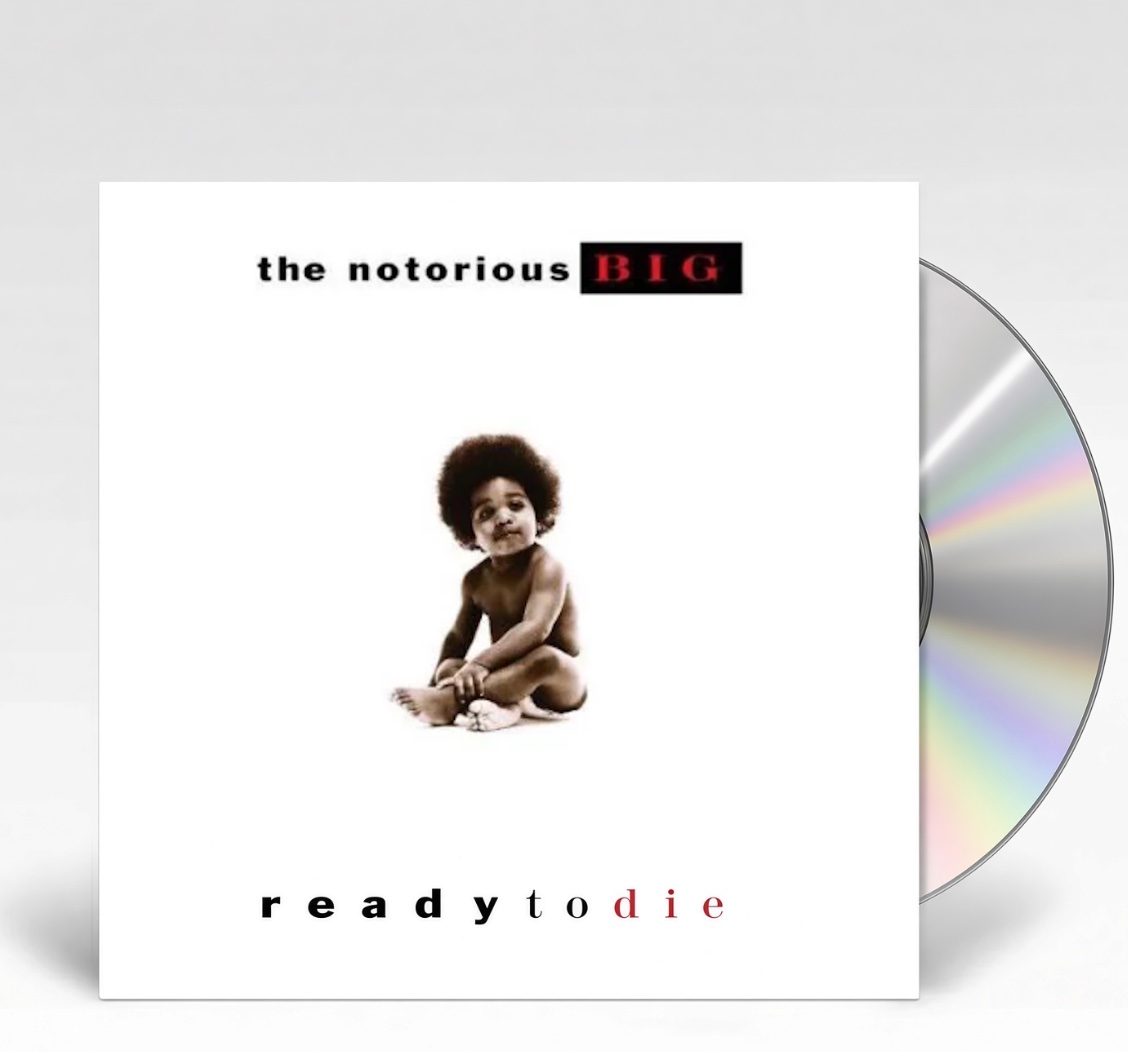
The Notorious B.I.G.
Strip away the mythology and there is no musical genius here — the production around him was competent commercial craft, no more. What there is, is a writer: a man nearly Shakespearean in his command of image, compression, and dramatic irony. But note the precise nature of it. Not the Greek mode — no railing against a destiny imposed by gods. Biggie's entire recorded output is an aversion to a destiny he understood to be his own, self-authored and approaching. A catalog that circles his own end with the specificity of a man drafting his own coroner's report; and then, in 1997, the report filed. That is not music. That is literature that happened to be released on a record label, and it deserves the ledger entry.
Listen →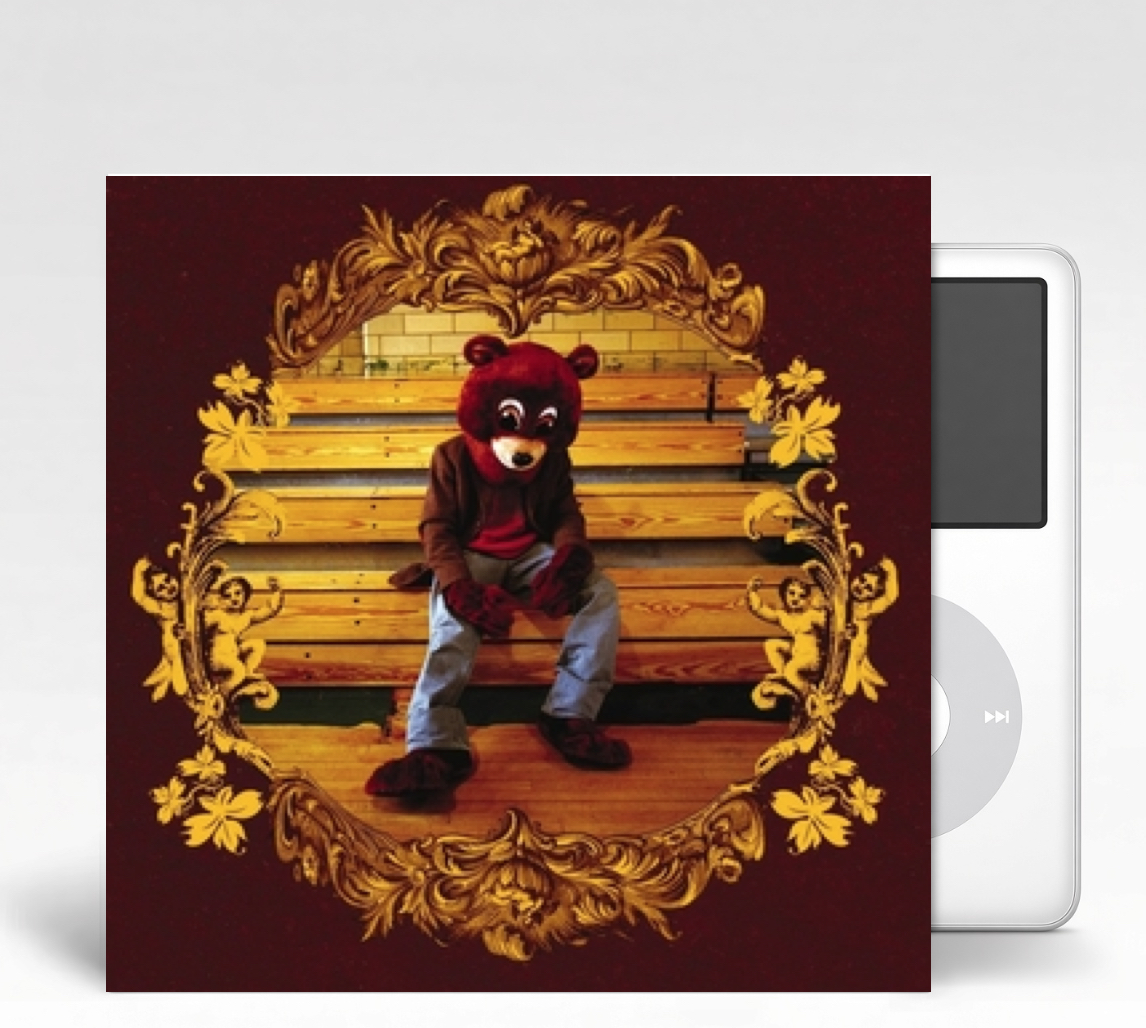
Kanye West
Rejected by the establishment that employed him — the producer told, in essence, to stay behind the boards — and who then willed his performing career into existence by the sweat of his brow, an act of sheer application the portfolio model was never designed to produce and did not fund on purpose. Let the assessment stay disciplined: the sample selection, endlessly praised, is not the achievement. Interesting crate-digging is taste, and taste is cheap. What he possessed that almost no one else in the genre's history possessed is reflection — a working capacity to see the world he is inside of and describe what it does to the people in it, including himself, while it is doing it to him. The early records interrogate the very consumption they celebrate.
Listen →
Joey Bada$$
Entered here as what he is: a throwaway semi-talent, included for completeness and for one narrow property. A teenager who arrived in 2012 sounding like a revivalist of a school two decades dead, he is capable of sounding almost thoughtful — and at intervals there is simply lyrical charm, an ease of phrase that momentarily suggests an inner life. It never compounds into a body of work that matters. But the charm was real, occasionally, and a slim canon can afford one footnote.
Listen →That is the list. Three entries across half a century, one of them a footnote. Defenders will protest the omissions; the omissions are the argument.
The Costume
Artist Development at 2648 West Grand was a literal finishing school. Maxine Powell — who had run her own finishing and modeling school in Detroit before Gordy hired her — put every act through mandatory instruction in deportment: how to sit, how to exit a car, how to hold a microphone without swallowing it, how to answer a hostile question from a white columnist without handing him his headline. No exemptions for hitmakers; Powell famously treated the biggest stars on the roster as the students most in need of the work. Down the hall, Cholly Atkins — half of the vaudeville duo Coles & Atkins, a man carrying forty years of Black theatrical stagecraft in his body — drilled choreography until precision was involuntary.
Then wardrobe, budgeted like tooling: matched tailored suits for the male groups, beaded gowns for the Supremes that could cost more than the recording sessions behind the singles they were bought to promote, wigs and hair dressed to survive television lighting and a three-show night. None of this was vanity, and none of it was free. It was market-access engineering carried as a real cost — and, in keeping with everything in Part IV, chunks of it were charged back against the artists' own accounts, so that a Supreme could be simultaneously wearing the company's investment and paying for it out of royalties she would never see. The return was specific and enormous: the finishing school is what moved the roster off the chitlin circuit and into the Copacabana, onto Ed Sullivan's soundstage, into the living rooms of white middle-class America — the grooming was the market expansion. The uniform signified that the product had passed quality control, and the finishing school was quality control applied to the human being.
Hip hop did not reform the department. It abolished it, and the portfolio model made the abolition rational. Why capitalize deportment, tailoring, and choreography — expensive, slow, requiring salaried professionals — when the new genre's authenticity discourse converted grooming into a liability and the ungroomed into a marketing asset? The development cost per signing collapsed toward zero, and the industry, delighted, employed — for lack of a better word — any unkempt bum willing to pick up a microphone. The resulting costume is exactly what an audit of zero-development-cost product would predict: alarming, never reserved, always unnecessarily loud. Logo-mania as identity, the trademark of a European fashion house doing the work Powell's diction lessons used to do; jewelry as a wearable balance sheet, illiquid net worth hung from the neck as proof of solvency to an audience trained to appraise it on sight. Where Motown's wardrobe was tooling amortized against market access, the chain is collateral displayed against doubt.
| Line item | The Factory | The Portfolio |
|---|---|---|
| Deportment | Maxine Powell, mandatory, no exemptions | Abolished — grooming reclassified as a liability |
| Choreography | Cholly Atkins, drilled to involuntary precision | None |
| Wardrobe | Tailored; gowns exceeding the session cost | Logo-mania, supplied by a third-party trademark |
| Charged to | The artist's royalty account | No one — there is nothing to charge |
| Return | The Copacabana. Ed Sullivan. Market expansion. | Unchanged ROI on a lower cost base |
Found singing for dimes on the Sunset Strip; a double album produced by Zappa. When the novelty receipts thinned he went back to the street, rediscovered whenever a label needed a curiosity, canonized in the obituaries as the godfather of "outsider music" — a genre name that is an accounting classification wearing an aesthetic's clothes.
Signed at the crest of a major-label bidding war conducted while the man himself was in psychiatric care. One record, then cut loose.
A chronically schizophrenic Chicago street artist chanting half-rapped rants over a keyboard's auto-accompaniment, handed a deal by one of the most powerful production figures in the industry and marketed more or less as-is, illness and all. Under the Motown regime he would never have survived a Friday quality-control meeting, let alone Powell's classroom. Under the portfolio regime he was a perfectly sound position.
The finishing school groomed the sane for the Copacabana and billed them for the privilege; the portfolio signs the ill as-is and lets the illness do the promotion for free.
The Scream

The logic of the preceding sections has exactly one terminus.
Take communities in which, by attrition of every alternative — the church music infrastructures thinned, the school instrumental programs defunded, the jazz and soul session economies dead with the studios that housed them — rap became the only type of music allowed: the sole available register of ambition, grief, courtship, and rage. Then note that the product occupying this monopoly position was, by the demarcation-era economics described above, substantially lifeless — clearance-proof presets, leased beats, portfolio filler. A monopoly genre with nothing inside it. What does that arithmetic produce?
It produces drill. And drill must be described accurately, which means describing two things at once. It is unmistakably awful — musically inert even by the standards of its inert parent, melodically vestigial, an aesthetic of sliding ownerless 808s and dread. And it is a scream from the darkness, and the scream is real. Notice what is absent from it: wealth is not paramount. None of the familiar trappings are — the cars, the aspiration, the fantasy of exit barely register. The stakes documented in the music, and in the funerals that track it with actuarial regularity, are the perceived territory of a housing project: young men killing and dying over blocks they do not own, will never own, could not monetize if they did. It is pathetically sad. It is also, plainly, a cry — the sound a culture makes when the last permitted channel of expression is handed to children with nothing in it, and they fill it with the only inventory on hand, which is proximity to death. The portfolio model even priced this in: the marginal cost of a drill record is a cracked DAW and a thirty-dollar beat lease, and the ROI holds. The ROI always holds. That is what it is for.
Coda: The Death Certificate
So render the finding. Motown's financial cost was booked, litigated, memoirized — understood. Its cultural cost was never understood as catastrophic, and it was exactly that: the liquidation of the last industrial-scale apparatus of Black American musical craft, sold at a sixty-one-million-dollar profit, with the craftsmen expensed and the machinery's absence filled by a genre that spent five decades producing three canonical entries, one of them a footnote, before decomposing into an audible cry from a project stairwell.