Opus in the Ashes
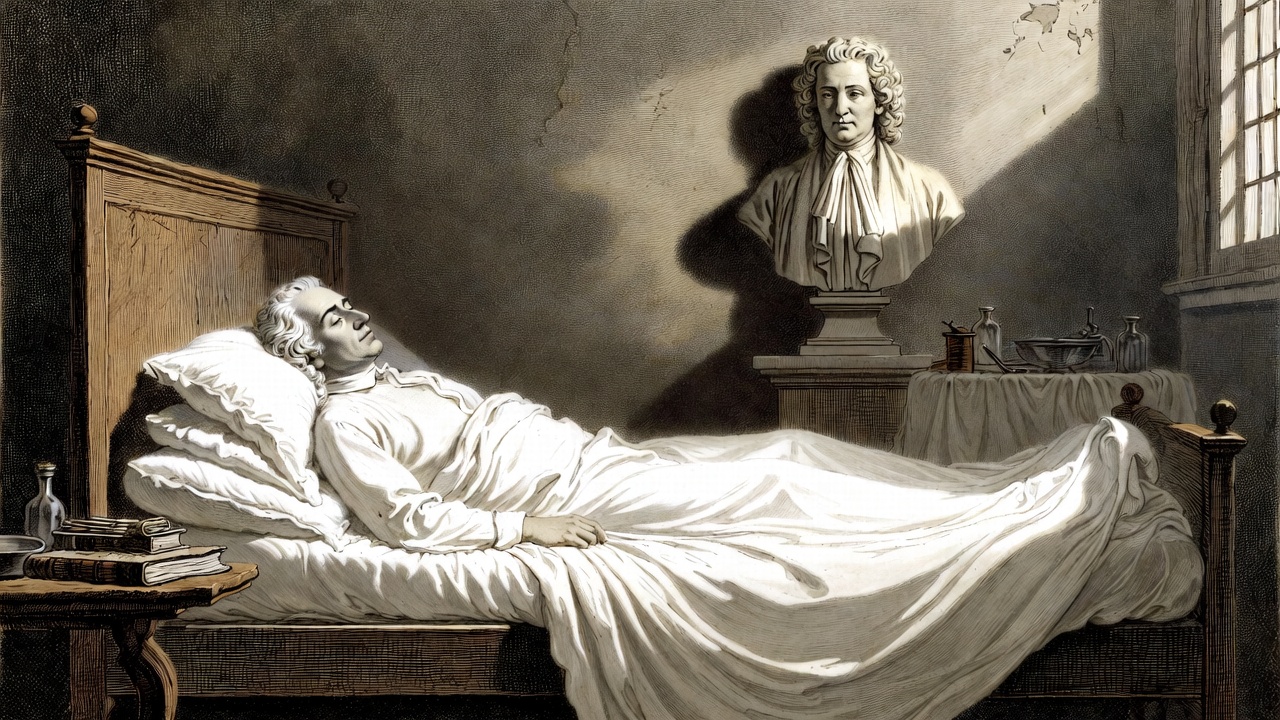
Voltaire died in May 1778, attended by a confessor, in front of witnesses, and there has never been any real mystery. What there has been, for two and a half centuries, is a contest between two legends — the atheist screaming for God, abandoned, bargaining half his fortune for six more months, and the Catholic pacified, reconciled, brought to heel. Both speak from the altar. Neither has ever made room for the question that would actually matter, which is who owned him. The only surviving versions are the two that keep the frame religious, and that is no accident of the record — the first and quietest instance of a thing that runs through everything below, widening as it goes.
one room
The Inversion at the Bedside
The confusion begins with the document, because the story told is not the true story. On 2 March 1778 the Abbé Gaultier — a former Jesuit, authorized by the Archbishop of Paris — came to Voltaire's chamber carrying a prepared text: a full declaration of Christian faith and recantation of his anti-Christian writings. The standard formula. The institutional requirement.
Voltaire refused. He asked to be left alone, took the pen, and wrote his own statement in a shaking hand: that he had confessed himself, that he trusted to die in the Catholic faith into which he was born, that he begged God's pardon for his errors. Every box the Church required, marked clean — but lighter. Thinner. A narrower concession.
Gaultier took the document. The record is consistent: the Jesuit arrived with the full recantation, Voltaire rejected the text for something less committed, and the priest accepted what was available. Later accounts praise Gaultier's mercy and moderation.
This reverses the received story, which holds that the plain truth was refused and the formula imposed — that Voltaire reached for a bare statement and was coerced into institutional language. The evidence runs the other way. Gaultier came with the formula; Voltaire declined its deepest commitment for a lighter one; the lighter one was accepted.
Coercion requires an agent. If institutional force was exerted at that bedside, name the one who exerted it — and he turns out to be a Jesuit trained in discernment who chose, by his own account, to honor the penitent's stated disposition rather than override it. One man's decision, made by a man with an interest in looking reasonable. Not institutional suppression. To call it suppression, you must say the institution operated through the very act of accepting the lighter statement — a claim that can never be falsified and is therefore worthless as evidence.
The recantation was a product of subterfuge and suppression. The actions behind it have a motive and an identifiable cabal. For whatever the bedside interaction was, it never required coercion, just unmitigated corruption. Days later, when the curate of Saint-Sulpice returned to press further — demanding an affirmation of the divinity of Christ — Voltaire refused the curate to the curate's face, sent the curate out, and died in peace three hours on.
one court
The Break with Frederick: Documentation of Suppression
The received account of the rupture with Frederick of Prussia is a financial scandal, and the scandal is real, and it is the most squalid episode of his life, and it survives in full. In November 1750, a few months into the Potsdam arrangement — twenty thousand livres a year, a chamberlain's key, the chore of correcting the king's bad French verse — Voltaire summoned a Berlin banker named Abraham Hirsch and hired him to go to Dresden and buy depreciated Saxon tax certificates at a third of face value, precisely the speculation Frederick had outlawed by edict two years before. The deal soured. The men fell out over money and collateral. Voltaire sprang at the banker's throat, had him arrested, and hauled the sordid business through open court in Berlin, where he won a narrow judgment and exposed the smuggling scheme to public view. Frederick's verdict is the line every biographer quotes: one squeezes the orange, then throws away the rind.
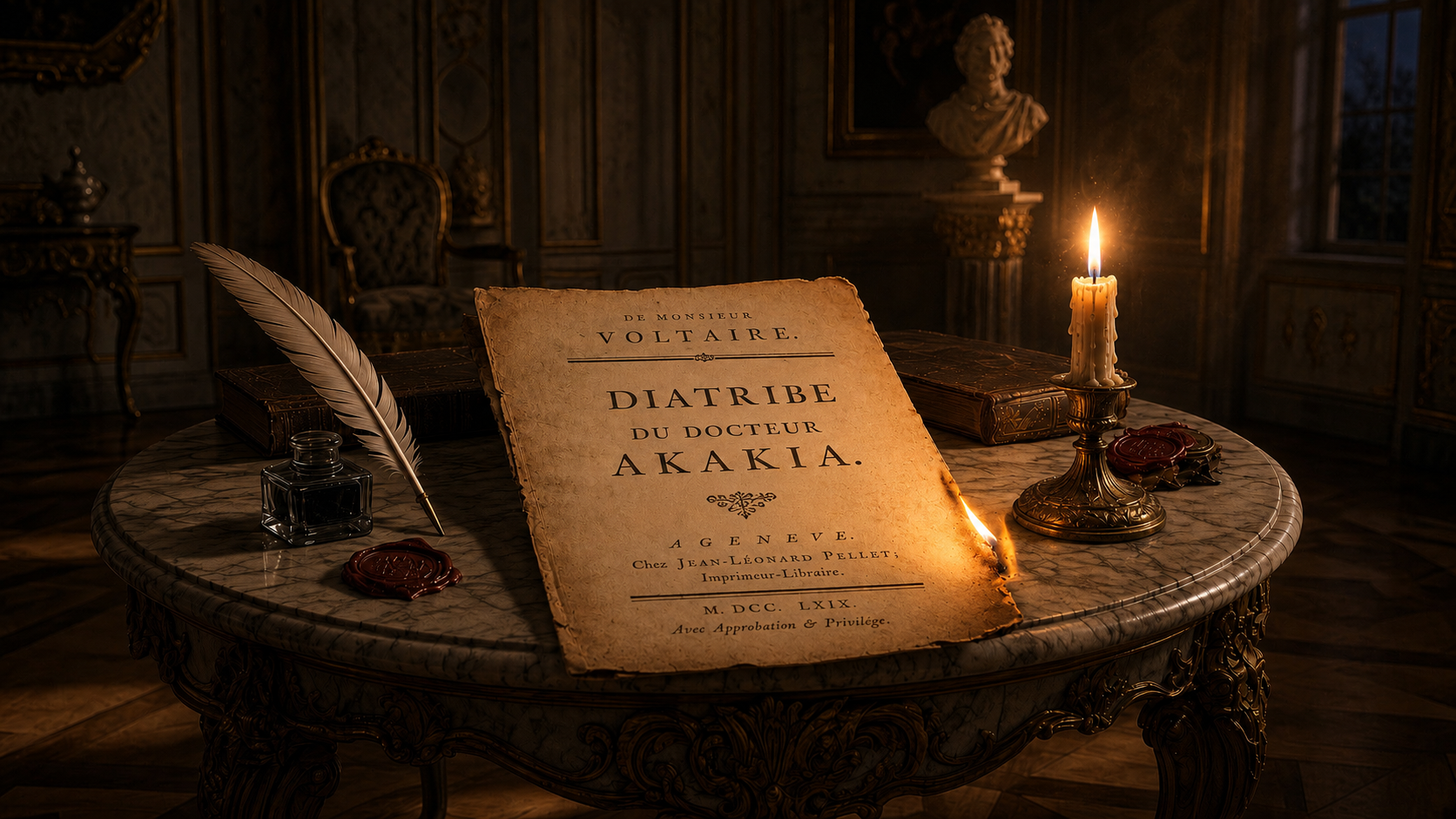
Here is what the biographers leave out, or bury in a clause. Frederick did not confine his contempt to metaphor. When Voltaire published his Diatribe du docteur Akakia, a savage satire on Maupertuis, president of the Berlin Academy, the king answered without ambiguity. He had the pamphlet publicly burned. Not suppressed. Not banned from circulation. Burned, consigned to the flames by royal decree.
Frederick had squeezed the orange. The rind had written satire.
That fact changes everything. Frederick did not merely rage out of proportion; he proved he would physically destroy writing that threatened him or his favorites. The offense was small. The penalty was enormous. The border seizure of Voltaire's niece, the humiliation, the years-long vendetta — all of it followed from a king who had already shown he would take a pen and turn it into contraband.
Voltaire understood this. A man who watches a sovereign burn what he has written knows exactly what he is to that sovereign: not a philosopher, not a colleague, but an asset whose worth depends on obedience and whose danger rises with every line that suggests the opposite. The burning was the lesson, measuring the reach of Frederick's arm and the thinness of any protection a patron could extend. The biographers record that the rage exceeded the offense — but not the recognition of what Voltaire had become, a possession that could think, and had shown it would think against its owner.
one estate
The Bond Between Them: What Frederick Could and Could Not Name
A millionaire king does not fall into the rage that coins a verdict like the orange, and does not, two years later, have a man intercepted at a border, his luggage searched and his niece dragged through the mud over a confiscated book of poems, because a courtier was party to an unseemly lawsuit. The stated cause is too small for the weight it must carry. The bonds are what Frederick could say. They are presentable; they put the king on the side of law and propriety and cast the asset as the grifter. What he could not say is written underneath the complaint in his own letter — the warning that Voltaire had applied to the wrong hand if he imagined he could intrigue and cabal in the king's house. The unforgivable offense was never the money, but the proof that the mind he had bought would not behave as a possession.
The Akakia proves Frederick saw the threat plainly enough to suppress it. He could not arrest Voltaire for understanding the system without admitting the system existed; the arrest would have been the confession. A pamphlet he could burn. He could demonstrate that writing against the patrons ended in erasure — and so, at the price of the arrest, the humiliation, and the flame, he taught his philosopher exactly what he was: a possession to be seized the moment it ceased to please, a voice to be silenced the moment it spoke out of turn.
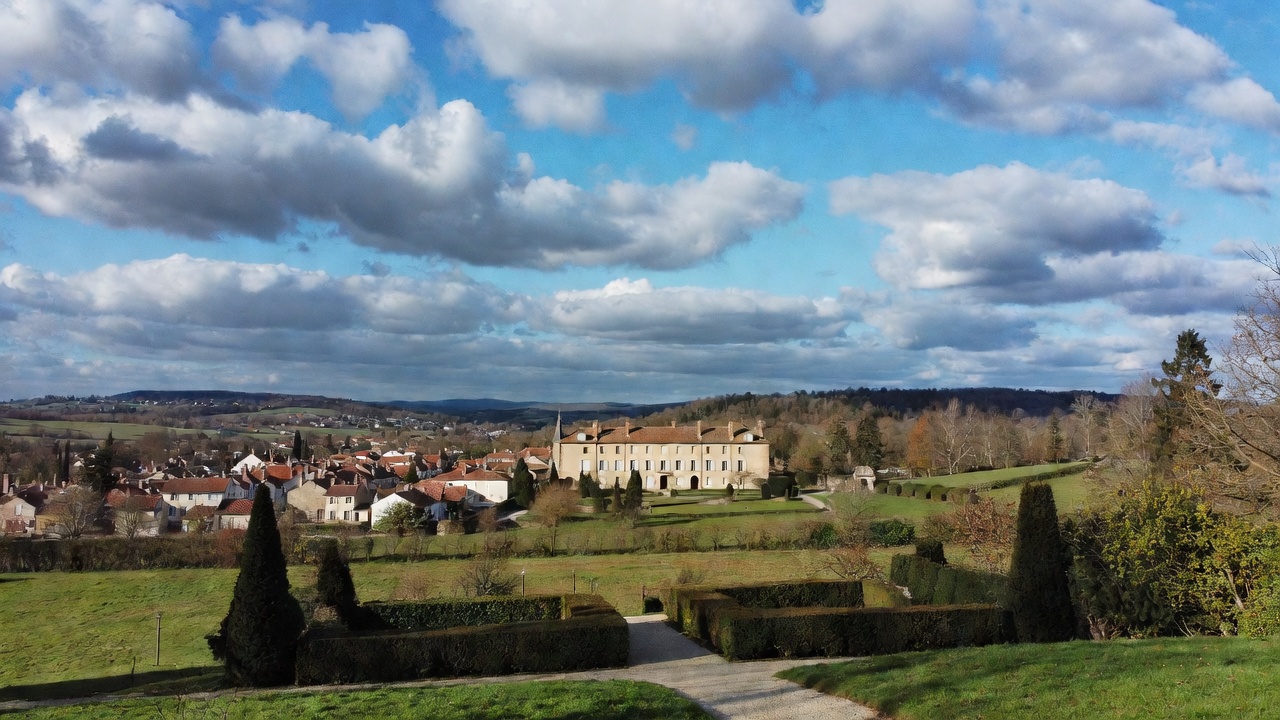
Voltaire spent the next twenty years building the single defense against that. He bought Ferney on the seam between France and Geneva, near enough to both that a move by one government could be answered by a step into the other's territory, and on the land he raised an economy that needed no crown — a watch trade, a mill, a village of more than a thousand souls living off his enterprise rather than a king's favor. When the last line of Candide enjoins the cultivation of one's garden, this is the garden: the private base from which a man can no longer be summoned, seized, or starved. Read the book straight and the calculation is plain.
one archive
The Archive Operation: Preservation as Control
The scale widens again, from a living man defending himself to a dead one being collected.
Catherine of Russia never troubled to hide what the purchase was for. She had corresponded with Voltaire for fifteen years and had used him exactly as a sovereign uses a philosophe — as advertisement, proof to Europe that her autocracy walked in the light of reason — and within weeks of his death her agents were on the estate. The instruction was to buy the library and, in her own words, everything that remained of his papers, her own letters among them, on the ground that the heirs did not grasp the value of what they held. The motive surfaces in a December instruction: beg the niece, most insistently, against giving out copies, against letting them be printed, against permitting them to be divulged in any way at all, because their printing was a thing — the phrase is Catherine's — she feared like fire.
She had watched Frederick burn the Akakia and read the niece's humiliation, and she had learned what direct suppression leaves behind: a hole. A burned pamphlet asks what was so dangerous. A confiscated archive asks the same. But an archive seized and kept — inventoried, locked in climate control — tells another story entirely, a story of patronage, of respect for learning, of enlightened stewardship. I have secured this treasure for the world.
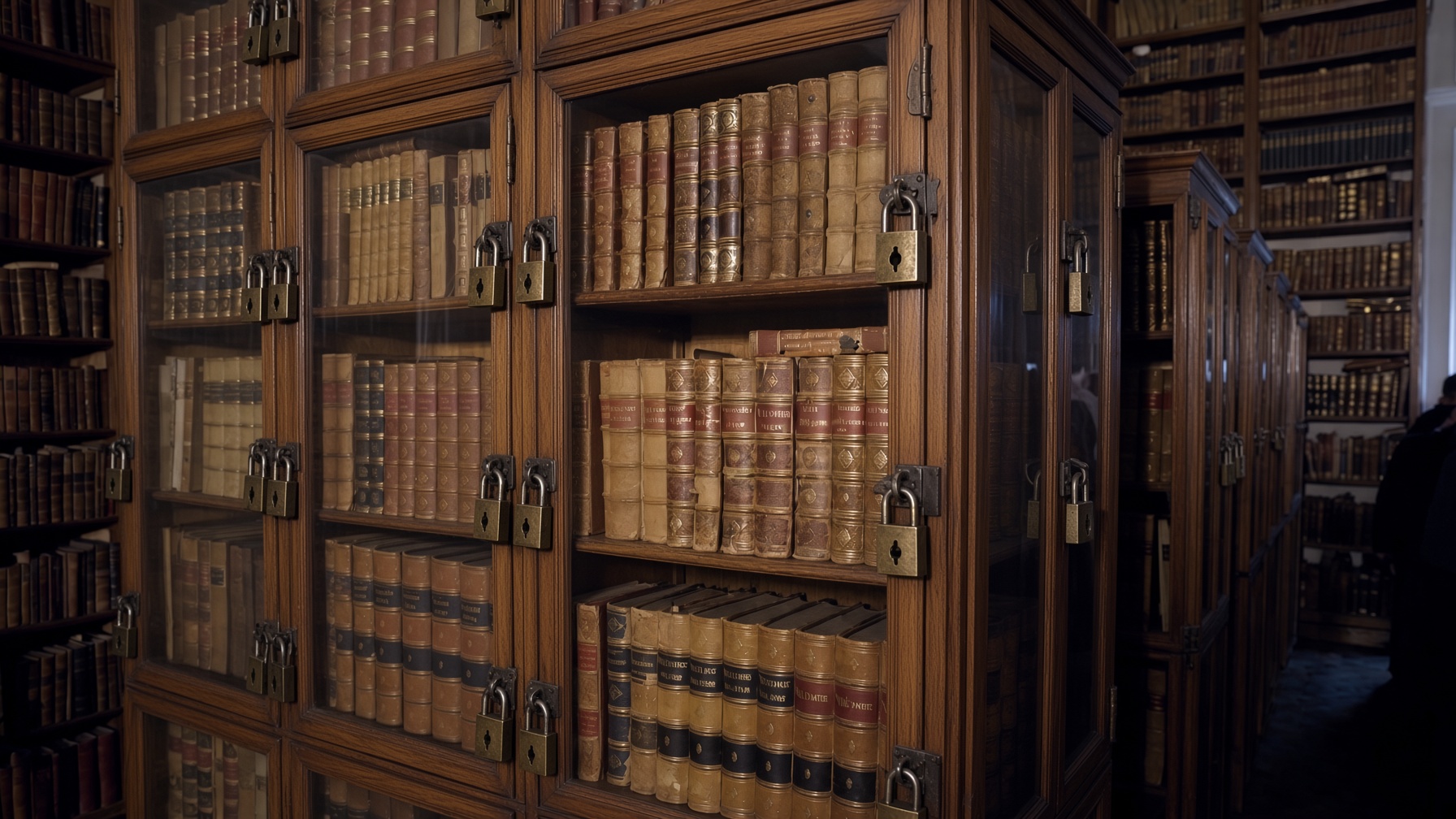
Her operation was therefore double. She bought 6,814 printed books — Voltaire's marginalia still legible in two thousand of them — and shipped them to St. Petersburg, where they were shelved in the order Ferney had kept them, a perfect replica behind glass in locked cases. The published works. The finished things. The record that could be verified and inspected.
The unpublished material went the other way. The manuscripts, the drafts, the working papers, the account Voltaire might have written of his patrons and the machine they ran — his heirs separated those out. They scattered into private hands and went missing across the centuries. No one burned them; they simply dispersed, became impossible to reassemble, impossible to authenticate. A dangerous document need not be burned once it has been made indistinguishable from loss, and for the buyer that is the better outcome. Destruction leaves a hole, and a hole invites the question. Dispersal closes the question while pretending to keep it open.
So Catherine could say: I preserved his legacy. The books are intact, the marginalia verified, the collection catalogued. And she could say nothing of the manuscripts, because they had never been part of the legacy — only what happened when an old man's papers were sorted by his heirs in the confusion of death. Frederick burned because the threat was immediate and his power absolute. Catherine kept, because her threat was theoretical — the account he might have written — and stewardship made the better cover. She owned the published record and governed the unpublished one by dispersing it. The message was identical: we own his voice. Only the method had matured.
one system
The System and Its Author
Frederick and Catherine are not merely two enlightened despots who happened to keep philosophes. They are the first sovereigns to run the mature form of a particular machine — legitimacy manufactured not before God or tradition but before the secular reasoning class, the philosophes and the salons and the press, standing among the men who defined reason treated as a strategic asset to be acquired, managed, and capitalized, while power expanded by erasure underneath. The machine had an author. Voltaire did not merely get bought by it; he wrote its code. Professed universal virtue worn as cover, authorship kept undecidable, the strike kept thin, public tolerance staged over private ruthlessness — he developed the whole protocol across sixty years as tradecraft, to guard his own wallet and his own position, and the sovereigns licensed it from him and deployed it at the scale of states.
He is the chief programmer of the operating system the modern West still runs.
one substitution
The Death and the Condemnation
The death takes its shape from what he was, at the end, positioned to write: the account that named the ownership and turned the system against the men who ran it. A programmer is safe while he runs his own code. The moment he writes the version that turns it against its operators — that documents what the machine is and hands the diagnosis to the people it is run on — he becomes the single most dangerous object in Europe, because an author's condemnation of his own protocol is the one indictment that cannot be dismissed as a misunderstanding of it. That condemnation could not be allowed to reach the world.
Frederick had already set the cost. The Akakia burned — a pamphlet, not even a book, a bound satire erased by fire. Voltaire knew the shape of the threat he had become, and Catherine, who had watched it all, knew it too.
So the man was converted into a sanitized monument: the lighter confession accepted and praised as sincere faith, the papers carried two thousand miles by a buyer who feared their printing like fire, the death handed to the altar to be retold as a question of his soul so it would never be read as a question of his ownership. He could not simply be deleted — a programmer of his fame vanishing cleanly would itself raise the question — so he was substituted instead. Substitution leaves a trail, because every patch that holds it in place is a fingerprint, and the patches multiply.
Concealing the programmer required concealing what his patrons were, which required keeping the operators legible only in the flattering register, which required the states themselves going dark — because a readable Prussia and a readable imperial Russia would each be a standing exhibit of the operating system in full operation, the purest cases of profess-and-erase ever run. And the states did go dark. Prussia was abolished outright, struck from the map and made a synonym for the militarism the postwar order defined itself against. Imperial Russia was sealed behind the rupture of 1917, its continuity broken, its archive — Voltaire's library among it — locked behind a new wall and shown to foreign visitors as a curiosity of a vanished country. Two empires made illegible, each for its own immediate and undisputed reasons, and the net effect every time the same: the machine and its author stay unreadable.
two empires
The Revolutionary Who Looked Away
The coordinating hands were Catherine's and Frederick's; their patronage paid for the work, and their legacy is what had to be erased — hence no Russia, no Prussia. But the machine is made of operators, not planners. No monarch's directive is needed anymore, because even a minor player can invoke the monarch's memory to defend the asset he holds. Once money has flowed into a version of events, knowing it becomes property, and property is defended by everyone who holds it without anyone being told to. Each act of preservation and omission is defensible on its own; the sum of them bends the same way every time, because everyone downstream is long the same brand, and to know the other thing would be a write-down on his own position.
This is why Lenin, drafting the revolutionary indictment of Russian autocracy, examined Peter the Great and omitted Catherine. Catherine was the documented case: professing enlightenment to Europe while she partitioned Poland, buying philosophers while she deepened serfdom, using the vocabulary of reason as cover for erasure. Catherine is the operating system made legible. Name her clearly and you must concede that the revolutionary state might be running the same protocol — professing universal liberation while it consolidates power, invoking historical necessity and scientific socialism as cover for the elimination of the inconvenient particular. So Catherine goes dark. The one theorist who should have had the cleanest sight line to the machinery — because he was trying to dismantle it — looks away from the single ruler who proved the case. His silence is the evidence that the machinery came through 1917 intact, only with different operators.
The trail runs, then, from a lie about one man's last words to the illegibility of two empires and the silence of the revolution's own theorist. A small lie needs small cover. A lie that required two empires to go dark, and required Lenin himself to look away from the one ruler who proved the case, was concealing something the size of the operating system — because it was the operating system, and the man whose laundered deathbed opens this account was the one who wrote it.
What survives is the apparatus built to replace the condemnation: a lighter confession accepted and praised, a scandal preserved in every humiliating particular and emptied of its only meaning, a library sealed in climate control while the manuscripts drained into history, a burned pamphlet that proved sovereigns would suppress, a death retold from the pulpit so the only permitted fault could be religious, two empires made unreadable, a revolutionary who indicted the safe king and spared the dangerous queen. The work is ash. But the dimensions of the fire are exact, because every patch laid down to contain it is still in place and still visible, and the reach of the containment is the measure of what it contained. The author wrote the condemnation of the system he had built. The system erased his last writing because it would expose the rest. And the manner of the erasure — concealment upon concealment, climbing from a bedside in Paris to half a continent of missing history — is the confession the system could not avoid leaving, written in the one record that cannot be edited: everything that had to be moved to keep the rest from being read.