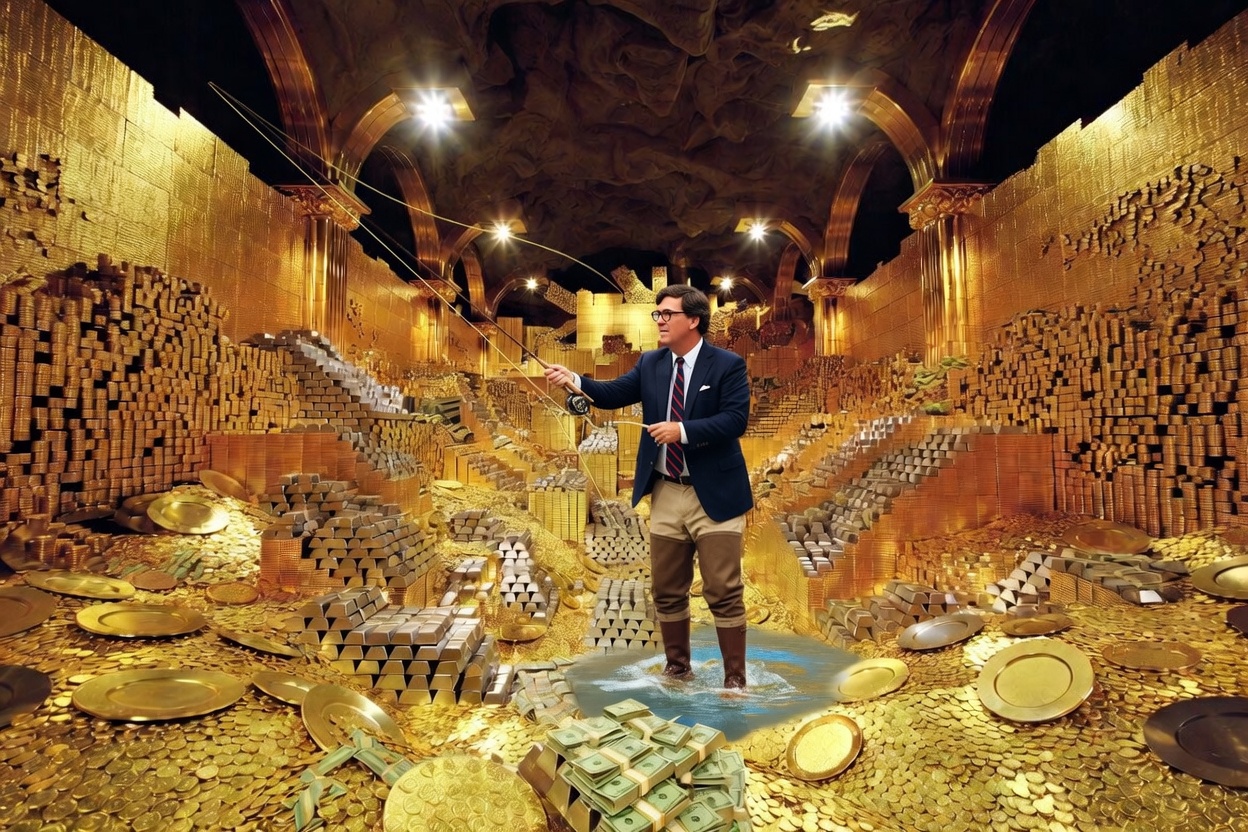
Before he became the man in charge of the Environmental Protection Agency, Lee Zeldin spent the autumn of 2022 doing something that no Republican had managed in New York in two decades: making Democrats nervous. His gubernatorial campaign against incumbent Kathy Hochul was not supposed to be competitive. New York had not elected a Republican governor since George Pataki's third term in 2002, and the party had grown so accustomed to losing the state's executive mansion that the nomination itself carried the faint odor of consolation prize. Zeldin declined to accept the framing. A six-term congressman from Suffolk County, a paratrooper who had deployed to Iraq with the 82nd Airborne, a lawyer who had passed the bar at twenty-three, he arrived at the general election with a single dominant message: crime. Not carbon, not curriculum, not the ideological menu items that consultants package as outreach — crime, the bone-simple question of whether New Yorkers felt safe walking out their front doors. In a state that tilts Democratic by twenty points in a favorable wind, he nearly pulled it off.
The final margin was 53.1 to 46.7 — six points in a state that had not even been on the map for Republicans at the statewide level. What the numbers obscure is the texture of the result. Zeldin carried voters outside the five boroughs who had not sent a Republican to Albany since the Clinton administration. He flipped downstate suburban precincts that Hochul's team had not bothered to defend. He received the highest raw vote total for a Republican gubernatorial nominee New York had seen in more than fifty years, and the highest percentage since 2002. The race was considered so unexpectedly tight in its final weeks that Nancy Pelosi reportedly told allies Hochul had not recognized the trouble soon enough, a criticism the governor publicly rejected. When the votes were tallied, a secondary consequence emerged that went largely unnoticed in the post-election processing: Zeldin's performance on Long Island and in the suburbs had created sufficient downballot drag to help flip four congressional seats from blue to red, giving House Republicans the majority they needed to elect Kevin McCarthy as Speaker. He lost the election for himself and won it for his party. That is not a common trajectory, and it was not lost on the people who keep score in Republican national politics.
What followed his defeat was conspicuous in its restraint. There was talk of a run for Republican National Committee chair; Zeldin declined. There was the expected parade of cable appearances, the maintenance of a public profile without the fever of obvious positioning. Then, in November 2024, Donald Trump named him to lead the Environmental Protection Agency, a selection that surprised virtually everyone who covers environmental policy and confused no one who had watched the governor's race. The logic of the appointment was not ideological symmetry — Zeldin had a fourteen percent lifetime score from the League of Conservation Voters, a metric the environmental left cited immediately as disqualifying — but something more structural. Trump wanted someone who could dismantle the administrative architecture of climate regulation without theatrical incompetence, someone whose military bearing, legal training, and facility with adversarial questioning would allow him to defend the demolition in public with composure and precision. The nomination was confirmed fifty-six to forty-two, with three Democratic senators crossing the aisle, a margin that signaled at minimum the recognition that Zeldin was not a figure easily caricatured.
He was sworn in on January 29, 2025, and proceeded to govern at velocity. What he constructed — or rather, what he accelerated — was described internally as the Powering the Great American Comeback Initiative: five pillars oriented around deregulation, permitting reform, energy dominance, cooperative federalism, and a return to what the agency called its statutory core. Critics, with some justification, observed that this last pillar functioned less as a return to mission than as a redefinition of it. Within weeks, Zeldin had placed environmental justice staff on administrative leave, initiated review of the 2009 endangerment finding that formed the legal foundation of greenhouse gas regulation, and launched what he called the largest deregulatory announcement in the agency's history. By July 2025, the Office of Research and Development had been closed. By February 2026, the formal repeal of the endangerment finding — signed by the president — was complete. One may hold any number of views about the wisdom of these actions. Their execution was, on its own terms, efficient.
What is harder to dismiss, because it proceeded in parallel with the deregulatory agenda rather than merely alongside it, was the operational record. The Tijuana River sewage crisis — a years-long cross-border catastrophe that had fouled Southern California beaches and defeated the diplomatic patience of multiple administrations — produced a bilateral agreement with Mexico within Zeldin's first year, cutting through what he estimated amounted to roughly twelve years of stalled construction on both sides of the border. Water quality protections for the Delaware River Basin were strengthened. Action on illegal pesticide importation was escalated. Criminal enforcement statistics, which critics of the new administration had predicted would crater, moved in the opposite direction: more criminal defendants sentenced in the administration's first year than in the last year of the prior administration; fines and restitution recovered leaping from tens of millions to hundreds of millions. Zeldin traveled to all fifty states in his first nine months, a retail exercise that reads as political groundwork but also as the conduct of someone who intends to be held accountable to the specific rather than the general.
Then came the fires.
The Palisades and Eaton fires ignited on January 7, 2025, and became within days two of the most destructive wildfires in California history — thirty-one dead, more than thirteen thousand residential properties reduced to ash, an urban landscape that had previously existed mainly in the imagination of catastrophists. The federal government's response was not, characteristically, swift. But the EPA's piece of it was. Zeldin deployed nearly twelve hundred personnel within weeks. The agency assembled eighty teams to clear hazardous materials from fire-impacted properties across both burn zones. The initial estimate for completing the Phase One hazardous materials survey — the precondition for any debris removal, any reconstruction, any semblance of return to normal life for the displaced — was three months. The EPA completed it in twenty-eight days, clearing more than thirteen thousand residential and three hundred commercial properties.
This was not a minor logistical accomplishment. It was, by the agency's own accounting and by independent measures, the largest wildfire cleanup operation in its history, involving the novel challenge of unprecedented lithium-ion battery disposal from electric vehicles and home storage systems — batteries that, when thermally destabilized, do not merely burn but can reignite weeks or months later. The Phase One certification was a prerequisite for the Army Corps of Engineers to begin Phase Two debris removal, which in turn was the prerequisite for anyone to break ground. Zeldin's teams compressed a twelve-week timeline into four. That is the kind of number that, in a different political environment, would appear in campaign advertisements.
The permit question came later and proved more complicated. Trump, having declared the slow pace of local permitting approvals a national embarrassment, directed Zeldin to oversee the effort to accelerate the reconstruction of homes in the Pacific Palisades. The president's executive order allowed Small Business Administration disaster loan borrowers to self-certify compliance with local building codes if they had not received a permit within sixty days of applying. Zeldin traveled to the burn zone in February 2026 — a year after the fires — to meet with Los Angeles Mayor Karen Bass and County Supervisor Kathryn Barger, to tour the destruction, and to ask, in terms that were direct enough to generate news coverage, why more than a thousand permit applications had been returned to residents without approval. "We want to know why every single one of these applications are sent back to the applicant," he said. "What is that hurdle that's preventing them the ability to be able to rebuild their home?"
Local officials disputed the framing. Legal scholars questioned the constitutional basis for federal override of municipal permitting. Bass called the executive order a political stunt. These objections may or may not have merit; the jurisdictional question remains genuinely contested. What is not contested is that Zeldin was the visible face of a federal government arriving, however imperfectly, at the site of a specific, tangible human disaster and asking concrete questions about what was preventing its resolution. In the taxonomy of governmental behavior, this is rarer than it should be.
Throughout all of this — the deregulatory campaign, the wildfire response, the enforcement metrics, the bilateral sewage agreement — he has also been accumulating something that cannot be manufactured by a communications operation: a reputation for knowing what he is talking about. This brings us to the recent afternoon before the House Appropriations Committee, and a hearing that, in the normal course of things, would have generated two minutes of footage and been forgotten by the following morning.
In the matter of congressional hearings, one has grown accustomed to a certain ritual: the member of Congress delivers a prepared aria of indignation, the witness recites bureaucratic pieties, and both parties depart with their scripts reinforced and the public none the wiser. It is theater of a particularly low order, designed less for illumination than for the evening news clip. Then, on a recent afternoon, Lee Zeldin elected to deviate from the program.
What unfolded was not a debate but a dissection. Rosa DeLauro, the veteran Democrat from Connecticut, arrived armed with the customary inventory of grievances: melting glaciers, flooded streets, an administration allegedly hostile to science itself. She invoked documentaries, quoted the EPA's own website back at its new steward, and warned of polluters being handed the keys to the republic. It was the sort of performance that has served her side well for years — earnest, voluminous, and almost entirely untethered from statute or ledger. One can appreciate the earnestness while observing that earnestness, in a legislative hearing, is not a substitute for argument.
Zeldin declined the invitation to play along. Instead, he asked a question so elementary it should have embarrassed anyone posing as a legislator: Where, precisely, in Section 202 of the Clean Air Act does Congress authorize the agency to wage war on global climate change? The answer — which is that no such authorization appears in that section or any other, and that the EPA's climate authority rested on a chain of administrative interpretation culminating in the endangerment finding he had just helped revoke — was not a partisan opinion but a structural description of the legal landscape. One is free to believe the law should be different; one is not free to pretend it currently says something it does not.
When DeLauro pivoted to recent Supreme Court decisions limiting agency improvisation, Zeldin pressed her on the names and holdings: Loper Bright Enterprises v. Raimondo, which in 2024 ended the forty-year deference doctrine established by Chevron; West Virginia v. EPA, which in 2022 constrained the agency's authority to regulate carbon from power plants under the Clean Air Act without explicit congressional authorization; Michigan v. EPA, the earlier ruling requiring cost-benefit consideration before major rulemaking. He noted, with the mildest trace of incredulity, that a sitting member of Congress appeared unfamiliar with the two most consequential administrative-law rulings of the past several years. The exchange did not grow heated; it grew clarifying. Rhetoric met text. Alarm met precedent. For anyone who has watched congressional hearings with any regularity, the inversion — the witness educating the committee rather than the reverse — carried a quiet charge.
The pattern repeated. DeLauro accused the administration of coddling polluters. Zeldin replied with numbers: criminal enforcement data, remediation volumes, recovered restitution figures that made the implicit comparison to prior performance difficult to sustain. When she brandished a prop cup and implied it contained glyphosate, he offered the only answer a regulator worthy of the title could give: do not drink it, do not inject it. Her response was to suggest that he might care to try. One does not require a seminar in etiquette to recognize which participant was treating the subject with gravity and which was not. The exchange became, briefly, a cable-news event, under the headline generated by DeLauro's declaration that she did not have to listen to what she called, in rather more colorful terms, the witness's response. The irony was that what she did not wish to listen to was, in the main, statute.
There is, of course, no shortage of politicians who can recite statistics or cite cases when it suits them. What distinguished Zeldin was the seamless integration: statute, enforcement metrics, jurisdictional history, and institutional restraint delivered without flourish or apology, in front of an audience that was not particularly receptive and in a setting that rewards neither. He did not deny the existence of environmental problems; he insisted that the agency's authority to address them is bounded by law, not by the latest academic consensus or the loudest cable monologue. In an era when both parties have grown comfortable treating the administrative state as a substitute legislature — when executive agencies routinely govern by rulemaking in domains Congress has never explicitly addressed — this amounts to something like heresy. It is also, one suspects, the sort of heresy voters exhausted by ritual may find refreshing, if anyone bothers to explain it to them clearly enough.
Which brings us to the speculation now circulating, however quietly, in certain quarters of the Republican firmament: could this be the outline of a presidential prospect? The question is not frivolous, though it deserves more skeptical examination than the enthusiasm of any particular faction can provide. Zeldin is forty-six years old, a veteran of Army airborne operations, a former state senator, a six-term congressman, a gubernatorial nominee who demonstrated genuine cross-demographic appeal in the country's third-most-populous state. He has been reported, as of April 2026, as under consideration for the attorney generalship — a nomination that, if it materialized, would mark him as among the most consequential regulatory and law-enforcement figures in the executive branch. The accumulation is not accidental. Men do not amass portfolios of this kind by wandering into them.
The governor's race, in this retrospective light, was not merely a near-miss. It was an audition, and it was noticed. The performance revealed a candidate capable of running a crime-focused, results-oriented campaign in the most hostile terrain available to Republican politics without collapsing into the identity performance that has made so many of his party's figures unelectable outside their base. He did not out-Trump Trump in New York; he ran a distinct argument, found a distinct coalition, and came within six points of winning a state Republicans had written off for a generation. The downballot consequences — the four congressional seats, the House majority — were collateral rather than intended, but they established a political debt that does not expire quickly.
The 2028 landscape remains, naturally, opaque. No one who predicts the next presidential field with confidence is to be trusted. The field will be crowded, the primaries brutal, and the national mood, which is volatile in the best of circumstances, will have been shaped by three additional years of events that are not yet visible from here. Zeldin possesses neither the fundraising infrastructure of an establishment candidate nor the performative combustibility of the populist variety; he occupies an unusual middle position that could prove either decisive or marginal depending on how the primary electorate sorts itself.
But the very qualities that made his EPA tenure and his Appropriations Committee appearance exceptional — the refusal to accept the premise of the question, the insistence on measurable results over performative anguish, the capacity to cite a statute and then a remediation acreage figure in the same breath without sounding rehearsed — could prove decisive in a contest that has grown weary of spectacle. He is neither the heir apparent nor the outsider darling. He is something potentially more useful: a figure who has demonstrated, in the least glamorous of settings, the capacity to govern rather than merely to posture. The EPA is not a glamorous portfolio. Cleanup operations in Altadena are not glamorous. A bilateral sewage agreement with Mexico's environment ministry is not glamorous. The capacity to execute these things under adversarial legislative questioning, with the files clearly read and the case numbers at hand, is precisely the kind of demonstrated competence that the presidential selection process is theoretically designed to reward and practically tends to discount.
Whether that capacity can be scaled to a national campaign is, of course, another question entirely. Presidential contests reward narrative as much as substance, and the electorate has shown a perverse fondness for candidates who promise transformation without the tedium of statutory homework. There is no clean arc to Zeldin's story — no dramatic resurrection, no martyrdom, no cult of personality metastasizing at the base. What there is, instead, is a record. Criminal enforcement up. Remediation acreage up. Bilateral agreements signed. Wildfire hazmat clearance completed in twenty-eight days against a ninety-day projection. Three Democratic senators voting to confirm him. Thirteen thousand families in Los Angeles cleared to begin removing the debris from what had been their houses.
It is not the stuff of myth. It is the stuff of management, which is either a liability or, in a country exhausted by the mythology of the past decade, the most subversive possible credential. The committee rooms of the House of Representatives are not designed to produce this kind of clarity. They are designed to produce footage. Zeldin produced, almost as a byproduct, something rarer: a record that stands up to examination rather than requiring protection from it.
Still, one is entitled to notice when a politician behaves as though the republic's institutions were meant to be taken seriously. Lee Zeldin has done so, repeatedly, in front of cameras that were not expecting the performance they received, in a department not known for producing presidential timber, in a party that frequently mistakes volume for weight. In the current climate, that alone qualifies him as a curiosity worth watching with more than casual attention. A dark horse, perhaps. But one that has cleared multiple fences now, at speed, and so far without breaking stride.