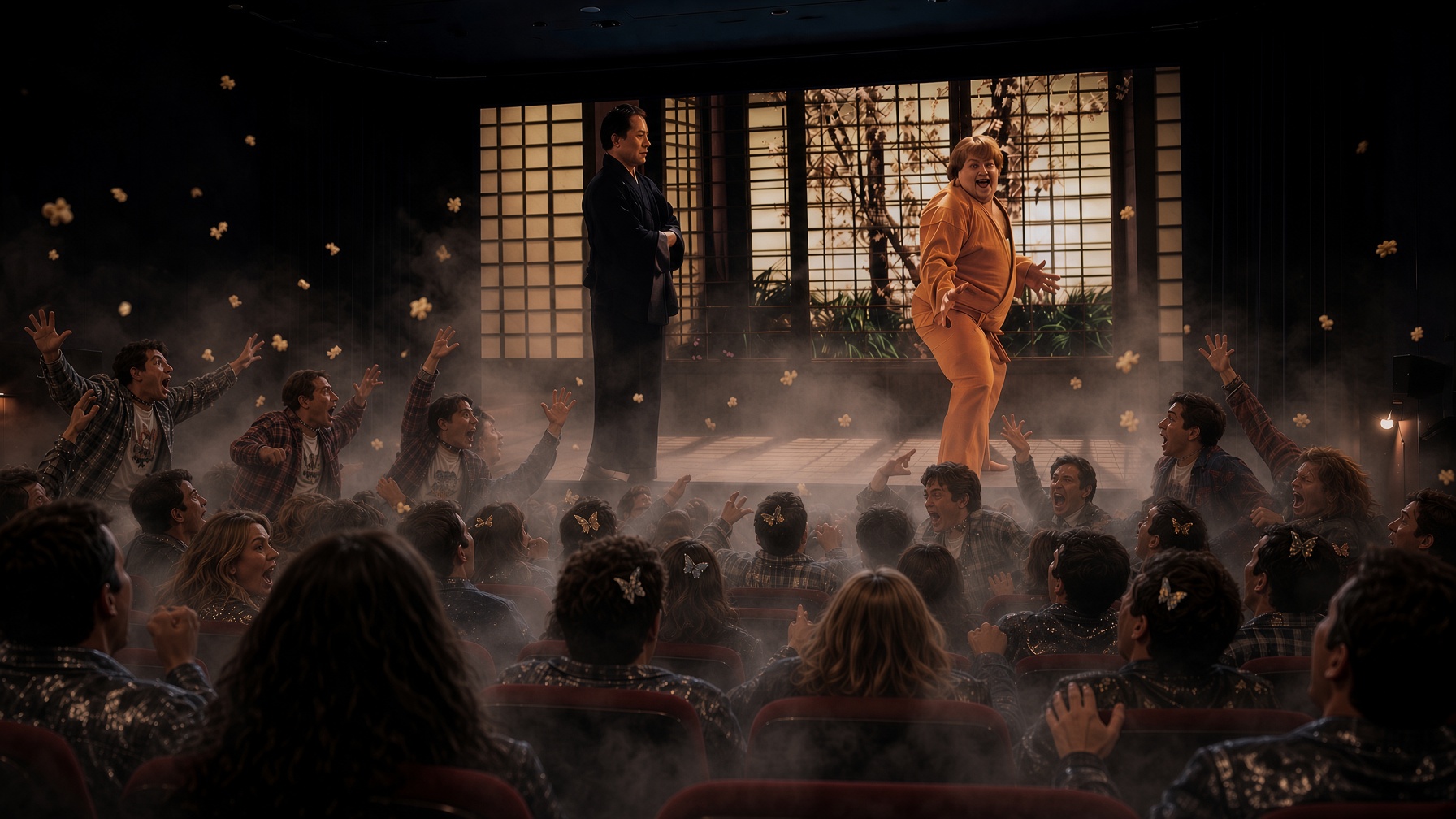
The primary vector of Jewish secularization was internal, not imported: a multi-generational crisis of authority inside the house of study.
Modern Jewish secularism is usually explained as the product of Haskalah, emancipation, and exposure to European critique of religion. This article argues that the primary vector was internal rather than external: a multi-generational crisis of authority precipitated by the rabbinic claim that an Oral Torah of Sinaitic status may override, expand, or nullify the plain sense of the Written Torah. When educated insiders recognized the magnitude of the divergence yet remained socially compelled to conform, a pervasive culture of performative observance arose. The resulting cognitive dissonance did not immediately produce apostasy; it produced cynicism. That cynicism, transmitted across two or three generations, ultimately issued in the distinctive anti-clerical, post-monotheistic secular Jewish identity that dominated the long twentieth century.
Reframing the Etiology of Jewish Unbelief
The standard narrative of Jewish secularization runs roughly as follows: traditional Ashkenazic society, sealed within the “ghetto” of halakha and Talmud, was shattered by the triple impact of political emancipation, the Haskalah, and historico-critical biblical scholarship. Only then did masses of Jews abandon observance.
This model, however, cannot explain two stubborn phenomena: the speed and thoroughness with which second- and third-generation Eastern European Jews abandoned not merely observance but theism itself, often with contempt rather than regret; and the peculiarly anti-rabbinic edge of so much modern Jewish secular culture — from Yiddish socialist mockery of the rebbe to Freud's Moses and Monotheism to Philip Roth's Portnoy's Complaint.
I propose that the decisive rupture occurred earlier and from within. By the late eighteenth century a critical mass of educated Jewish men — rabbis, dayyanim, melamdim, and wealthy balebatim — had become privately convinced that the Oral Law's claim to Sinaitic authority was historically and textually untenable.
Unable to exit the system without catastrophic social cost, they adopted a posture of outward conformity and inward detachment. Their children inherited not naïve faith but a tradition of performative piety; their grandchildren rejected the performance once the external walls fell.
Modern Jewish secularism is therefore less the child of Voltaire than the belated grandchild of suppressed rabbinic scepticism.
The Supersessionist Premise and Its Textual Vulnerability
The foundational assertion of post-70 CE rabbinic Judaism is that the Oral Torah — eventually codified in Mishnah, Talmud, and midrash — possesses co-equal revelatory status with the Written Torah and may abrogate or reinterpret it virtually without limit (m. Avot 1:1; b. Shabb. 31a; Maimonides, Mamrim 2:1).
The Tanakh itself, however, repeatedly insists on the sufficiency and finality of the written revelation. These verses became the Achilles heel of the dual-Torah theory once Hebrew literacy spread beyond a tiny elite in the eighteenth and nineteenth centuries.
A competent baal qore who compared the biblical text with everyday halakha could hardly avoid noticing that the distance was often vast. The Torah prohibits kindling fire on Shabbat (Exod 35:3); rabbinic halakha multiplies thirty-nine forbidden melakhot and thousands of derivative gezerot. The Torah commands literal talion (Exod 21:23–25); the Oral Law insists this always meant monetary compensation (b. B. Qam. 83b–84a).
The Torah mandates capital punishment for murder even by Gentiles under Noahide law (Gen 9:6); rabbinic Noahide courts are rendered impotent by procedural restrictions unknown to the text (t. Sanh. 9:1; Maimonides, Melakhim 9:14). The cumulative effect was devastating: the more one studied, the clearer it became that the operating legal system rested on a claim the Written Torah itself appeared to refute.
The Divergence Matrix
A single prohibition: you shall kindle no fire.
Thirty-nine melakhot, and a thousand fences around them.
derivative gezerot
Eye for eye, tooth for tooth, life for life.
It always meant money. It never meant an eye.
The Social Impossibility of Open Dissent and the Birth of Performative Orthodoxy
In pre-modern Ashkenazic society, open rejection of the Oral Law was socially suicidal. The heretic (min, apikores) faced excommunication, loss of burial rights, and economic boycott (Rema, Yoreh De'ah 334:1). Even private doubt, if detected, could destroy marriages and livelihoods.
The only viable strategy for the educated sceptic was therefore outward conformity coupled with inward detachment. Autobiographical and epistolary sources from the late eighteenth and early nineteenth centuries reveal this posture in statu nascendi.
By the mid-nineteenth century this performative orthodoxy had become a recognizable social type: the balebos who davened with a minyan yet read Haskalah periodicals in the toilet; the rav who issued strict pesaqim in public while privately admitting they rested on sand.
Cognitive dissonance theory (Festinger 1957; Aronson 1997) predicts that when behavior and belief conflict, individuals either change the behavior or reinterpret the belief. In the Ashkenazic case neither option was fully available — so the dissonance was displaced onto the next generation.
“The secular Jew was not mourning a lost faith; he was avenging a betrayed one.”
Intergenerational Transmission of Cynicism
Children raised in such homes learned three lessons simultaneously — and learned them as one lesson, indivisible.
- 01The external forms of rabbinic Judaism must be maintained at all costs.
- 02Many of those forms lack credible divine sanction.
- 03One does not speak openly about (02).
The result was not loss of faith but a faith in the necessity of faking faith. Yiddish humour of the period is saturated with this double vision: the rebbe who performs miracles yet cannot control his own wife, the shadkhan who swears by the Torah while forging documents, the melamed who beats children for ignorance he himself half-shares.
The Tipping Point: Emancipation and the Collapse of Coercion
When emancipation removed the external sanctions that had enforced conformity, the inherited cynicism metastasized into open secularism with astonishing rapidity. The generation born after 1880 no longer needed to pretend.
The performance was exposed as performance, and the emotional energy previously invested in maintaining the fiction was liberated for revolutionary politics, psychoanalysis, Zionism, or simple hedonism.
This explains why Jewish secularization was so often accompanied by contempt rather than nostalgia.
Three generations, one displacement.
The Intergenerational Dissonance Funnel
The Sceptical Elite
Outward scholar, inward void. Private conviction that the dual-Torah claim cannot survive its own texts — held silently, at full social cost.
The Performative Conformists
A theatrical mask over a praying figure. Faith relocated from the content of the ritual to the necessity of performing it.
The Unbound Secularists
The mask shatters into revolution, psychoanalysis, and literature. Apostasy, and reassertion by other means.
From Private Doubt to Public Unbelief
Modern Jewish secularism is therefore not primarily a story of enlightenment from without but of disillusionment from within. The rabbinic assertion that an Oral Torah may override the Written Torah created a structural instability that became visible as soon as literacy spread.
The social necessity of suppressing that recognition produced a culture of performative piety whose cynicism was transmitted across generations until external coercion collapsed. The archetypal secular Jew of the twentieth century — Trotsky, Freud, Einstein, Bellow — was thus not the first Jew to doubt but the first who could afford to say so out loud.
The Written Torah itself had warned that adding to the word would eventually undermine confidence in the word (Deut 4:2). History has confirmed the accuracy of the warning in a way its rabbinic interpreters never intended.
Aronson, Elliot. 1997. “Back to the Future: Retrospective Review of Leon Festinger's A Theory of Cognitive Dissonance.” American Journal of Psychology 110: 127–37.
Eisen, Arnold. 1987. The Chosen People in America. Bloomington: Indiana University Press.
Feiner, Shmuel. 2002. The Jewish Enlightenment. Philadelphia: University of Pennsylvania Press.
Festinger, Leon. 1957. A Theory of Cognitive Dissonance. Stanford: Stanford University Press.
Katz, Jacob. 1973. Out of the Ghetto: The Social Background of Jewish Emancipation, 1770–1870. Cambridge: Harvard University Press.